Early aircraft were built using wooden frames with metal bracing wires, flight control cables and engine cowlings. The vast majority were biplanes from a multitude of designs. All flight surfaces, wings and fuselage were composed of stretched doped fabric over the wooden framing. The dope when dried added some strength to the structure of the aircraft as well as waterproofing. However, early dopes were cellulose based, highly flammable and posed a significant health risk.
Before WW1 the doped fabric was seldom coloured and therefore the appearance was of natural unbleached linen with a semi-transparent finish, known as Clear Doped Linen (CDL). This faded over time to give a yellowish/tan appearance. After war broke out it was clear that a coloured doped linen was required for camouflage purposes. A series of dopes were used on upper surfaces early in the war after experiments at the Royal Aircraft Factory in 1913. The experiments were to discover the correct pigmentation to protect against harmful ultra-violet rays. These compounds were known as “Protective Covering” and numbered accordingly. After many concoctions PC-10 was the dope used along with PC-12. Coloured Dope was used on upper surfaces and fuselage of aeroplanes from early 1915, anywhere that the fabric covered. It was often carried over the edges of the wings giving a thin strip around the outside of the lower and upper wing undersides. Under surfaces were left in CDL which gave the unbleached linen finish. PC-10 dried in all sorts of green/ochre/olive shades and often with a dominant green hue. Over a short time this would fade to an earth brown colour. National markings, squadron identification and serials were added on top often in white, although red, blue and black were utilised by some squadrons.
The metal cowlings and engine housing were mostly left as a natural finish with some manufacturers later painting the front grey or black. Certain types retained their original polished plywood finish, the Sopwith Camel being an example. Colours, patterns and squadron motifs crept in during the latter years of WW1 as well as personal pilot markings.
After WW1 the need for camouflage was no longer required. However, most aircraft that continued in service after the war retained their camouflage colour. The night bombers adopted the NIVO colour, which was more of a black/green, as did some fighters. However, new aircraft to be introduced for service used a silver dope on the fabric surfaces and Aluminium or natural metal on the all-metal surfaces giving rise to the ‘Silver Years’. Many aircraft became more colourful with the introduction of squadron flashes and badges. As aircraft development progressed more of the surface area became stretched metal. During the 1930s some types began to adopt a dark green top surface coat on the fuselage, the Bristol Bulldog being a prime example, and in 1937/38, camouflage was once again reinstated on frontline squadrons as a reaction to the looming threat of war. Doped linen continued to be used on some early WW2 aircraft, the Wellington and Hurricane being prime examples.

In the early 1930s the RAF adopted a standard of colours for use on its aircraft and vehicles known as the British Standard BS 381. It was revised in 1931 to BS 381C with a palette of 57 colours rising to 64 by the run up to WW2. In 1940 the Ministry of Aircraft Production, MAP, took control of BS 381C with colours removed and added both before and during the war. Only a few of these were ever used for camouflage purposes and after an update in 1943, and again in 1944, the list reduced to 27. Most camouflage schemes were stipulated by the Air Ministry for the RAF and the Admiralty for FAA aircraft. The role of the specific type determined the colour scheme. Most schemes were based around a disruptive two-colour upper surface with a lighter underside. There were two types, ‘A’ with broad bands from top left to bottom right and ‘B’ with bands from top right to bottom left.
World War 2
The first RAF scheme to be introduced in early 1938 was the Temperate Land Scheme consisting of disruptive Dark Earth and Dark Green upper with the underside painted a split Night on the port and White on the starboard side. This varied considerably with some being wing section only, some nose and wing, some with alternate ailerons and some the whole underside. An example would be the Skua retaining the Sky Grey on the rear fuselage underside. The main reason for Night and White was identification from the ground by the Observer Corps. By the outbreak of the war, it became obvious that an underside colour for day fighters and medium bombers would be required. At this stage spinners were predominantly Night.
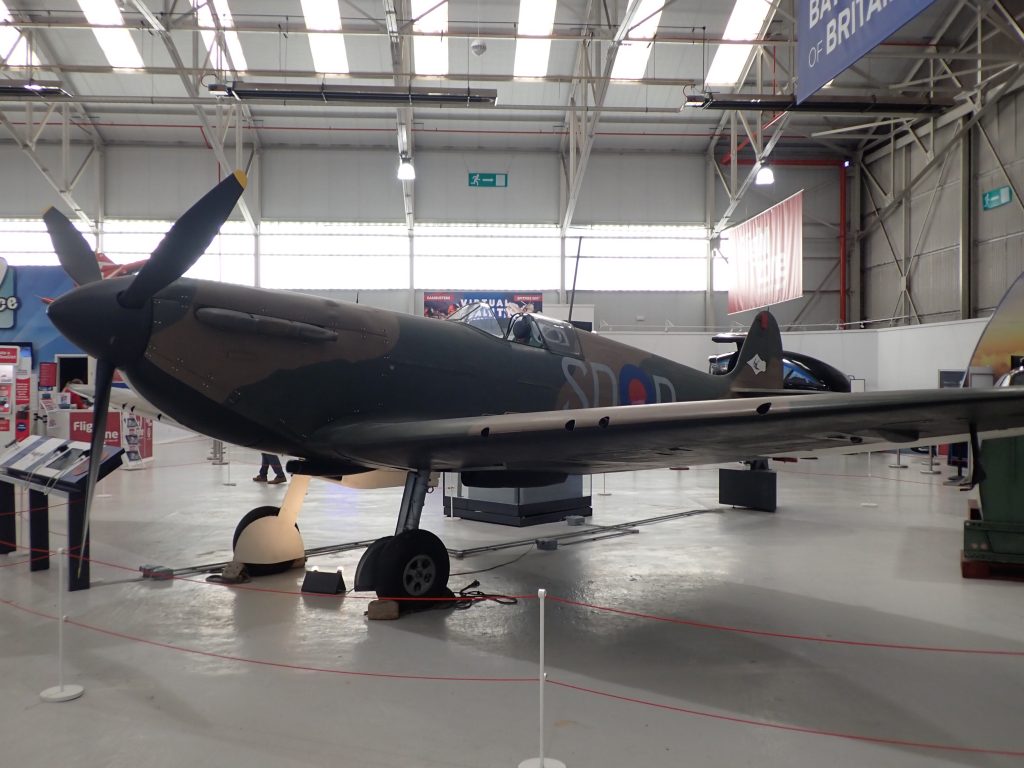
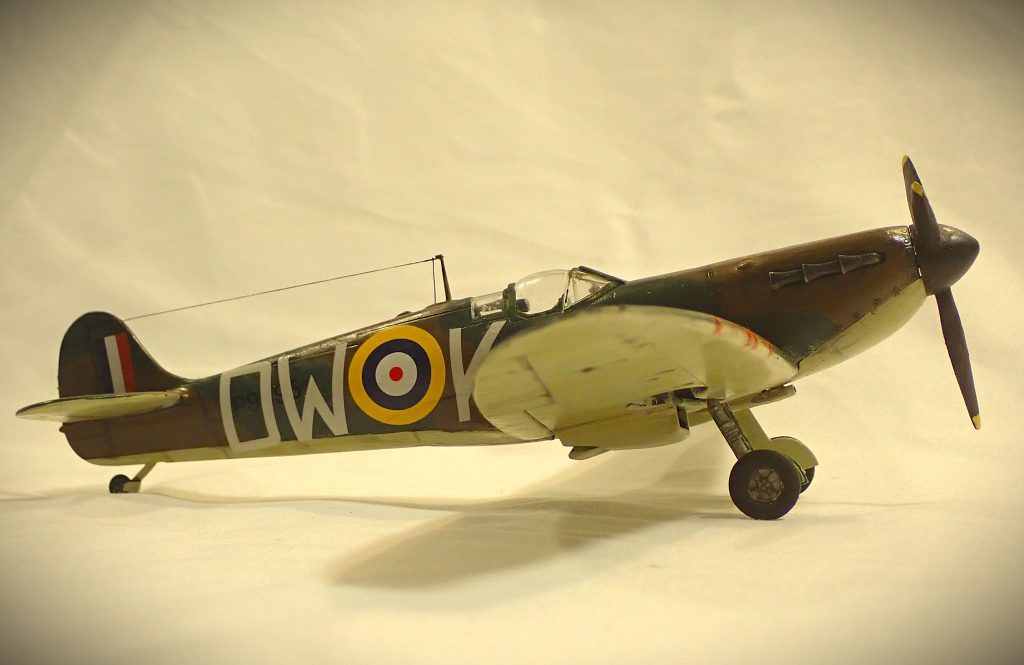
From early August 1940 the Sky Type S, a light green-grey colour, was introduced as an underside colour to blend with the sky rather than be seen from the ground. However, it was not widely available, and Air Ministry orders would often overlook the new colour. Some orders referred to it as Duck Egg Blue. In the end, four colours were used at first and introduced during spring 1940 and the Battle of Britain. These were Sky S, Sky Blue, Eau-de-Nil, a light beige blue and limited use of Sky Grey. The underside colour Sky S was not standardised until later in the year. In December 1940 the addition of a Sky S band on the rear fuselage was applied to day fighters prompting most squadrons to adopt this colour for the spinner.
The Tropical Land Scheme was adopted for the Mediterranean theatre early in the war but there is much confusion with varied schemes using combinations of Light Earth, Dark Green, Middle Stone, Light Stone and Dark Earth with Sky S or Sky-Blue undersides. In 1941 the scheme, now the Desert Scheme was standardised to a disruptive Middle Stone and Dark Earth upper with Azure undersides for the Mediterranean and North Africa theatres. By this time most squadrons had adopted a Dull Red for the spinner. As the war left the desert and moved into southern Mediterranean areas the Day Fighter Scheme was re-applied although some were left in bare metal finish, for example British Mustangs.
In August 1941 a revised Temperate Land Scheme was introduced as the Day Fighter Scheme. The Dark Green was retained with Dark Earth being replaced by Ocean Grey, a dark grey with a distinct blue tinge. Undersides were standardised to Medium Sea Grey. The Sky S band and spinner remained on day fighters. From August 1942 an order was issued to apply yellow to the outboard leading edges of wings.
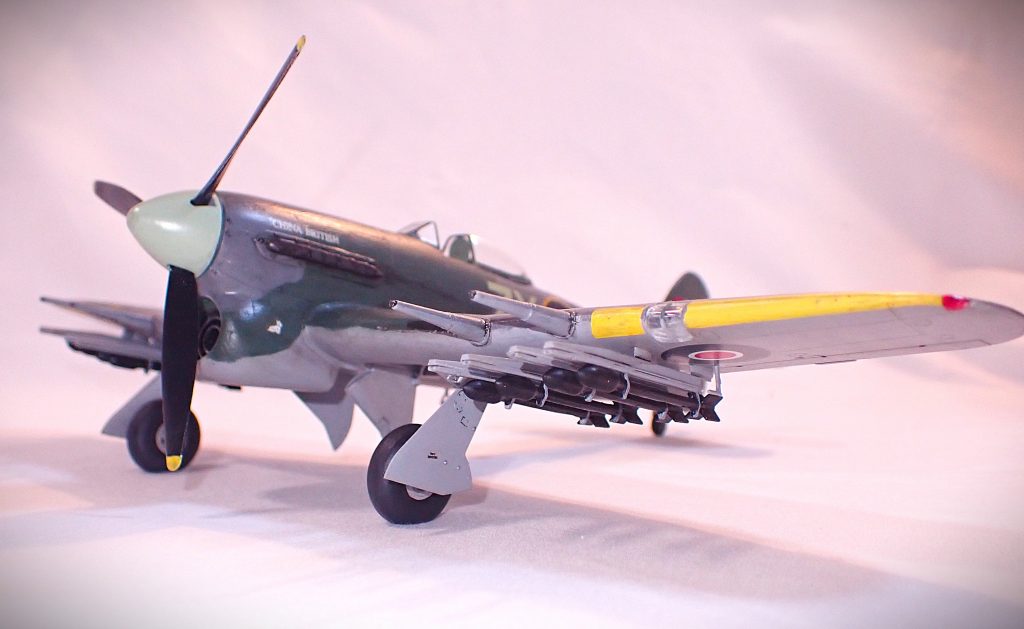
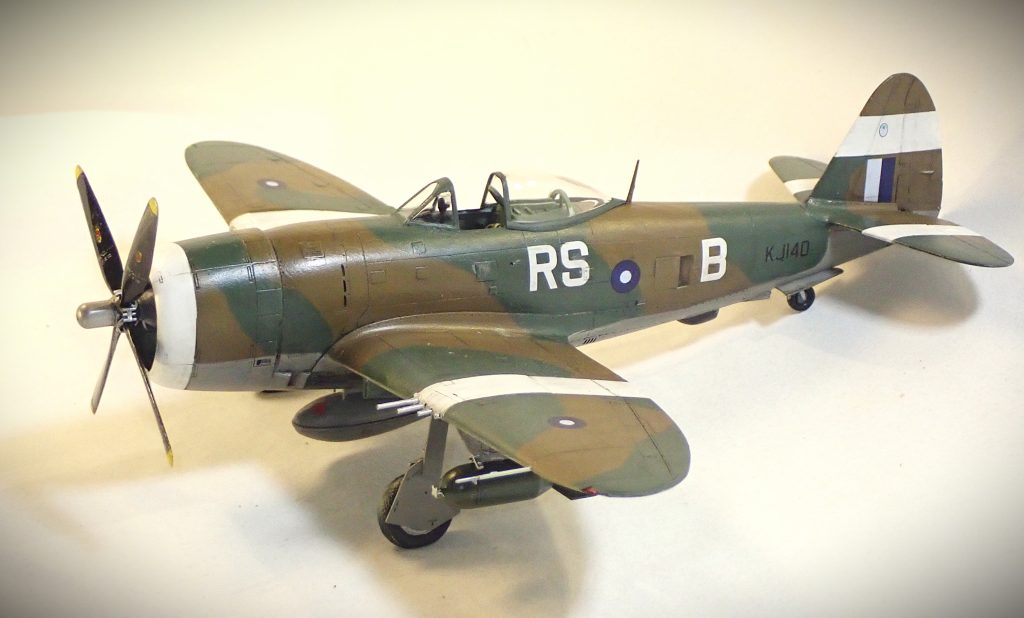
Aircraft in the South-East Asia theatre had another scheme which was an adaption of the Temperate Land Scheme using disruptive Dark Green and Dark Earth upper with Medium Ocean Grey undersides. A single white stripe was applied to each wing, each side of the tail fin and both tail stabilisers for identification purposes. Later in the war the Day Fighter Scheme became standard although not all squadrons changed. Lend Lease aircraft were painted in US factory equivalents then resprayed in the field to BS colours.
Photo-reconnaissance aircraft adopted a number of colours early on, but none were standardised until late 1940 when Camotint Green was adopted which was a light Duck Egg Green. As recon missions progressed to high altitude a new colour was introduced as Photo Reconnaissance Unit Blue or PRU Blue. This remained until well after the war. Photo-reconnaissance Spitfires in the Mediterranean were given an overall Dark Mediterranean Blue with faded low-vis roundels. Low altitude recon units retained a camouflage pattern with many units adopting PRU Pink as an overall colour. High Altitude fighters, like the Spitfire Mk.VII, adopted PRU Blue as an underside colour with Medium Sea Grey upper. Fading was a major issue in all theatres, especially the harsh sun of the Mediterranean and North Africa, Azure being a prime example as it tended to fade to light blue very quickly.
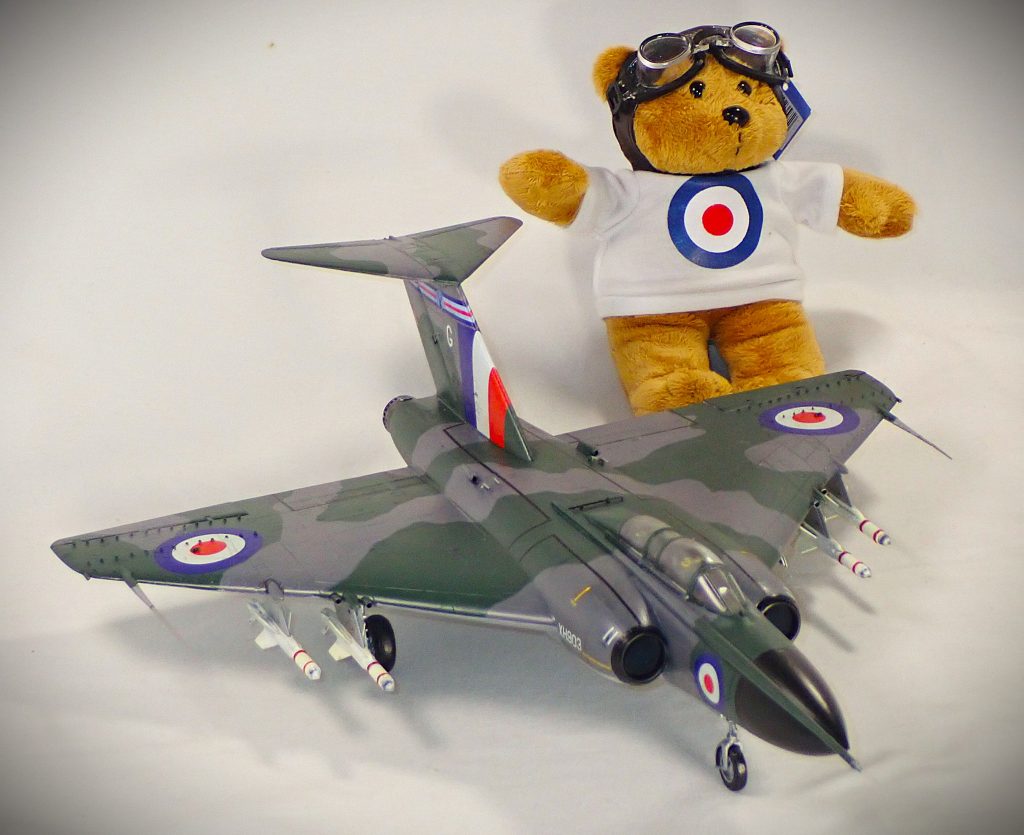
As usual, anomalies did occur with many discrepancies of course. Many Lend Lease aircraft were painted in DuPont colours, US equivalents, before being shipped which were not, as it turned out, as equivalent as was thought. Some aircraft sent to Malta were painted a Dark Mediterranean Blue upper with Azure undersides however, many of these planes were destroyed. Subsequent aircraft remained in the Day Fighter Scheme or Desert Scheme. When the Gloster Meteor entered service in 1944 it was given the standard Day Fighter Scheme on home defence duties. However, with No.616 Squadron moving to France there was a serious danger that the Meteor could be mistaken for the Me 262 by AA batteries and Allied fighters so the aircraft were given a coat of overall White.
Bombers and strategic aircraft were camouflaged in more or less the same way with some definitive differences. All bombers used the Temperate Land Scheme of Dark Earth/Dark Green, usually in the ‘B’ configuration which was used until the end of the war. Night bombers were given a Special Night underside, a matt black equivalent, with day bombers having Medium Sea Grey undersides. Early aircraft had the demarcation line low but as bombing operations in Europe turned to night missions the demarcation line was placed high for night bombers. Most had straight demarcation lines, but some were wavy. Mosquito bomber versions for daytime ops were an exception in using the Day Fighter Scheme with a mid-way demarcation line. Bombers in the Mediterranean used the Desert Scheme upper with Azure undersides for day bombers and Special Night undersides for night bombers. Unlike the fighters, the scheme remained until the end of the war.
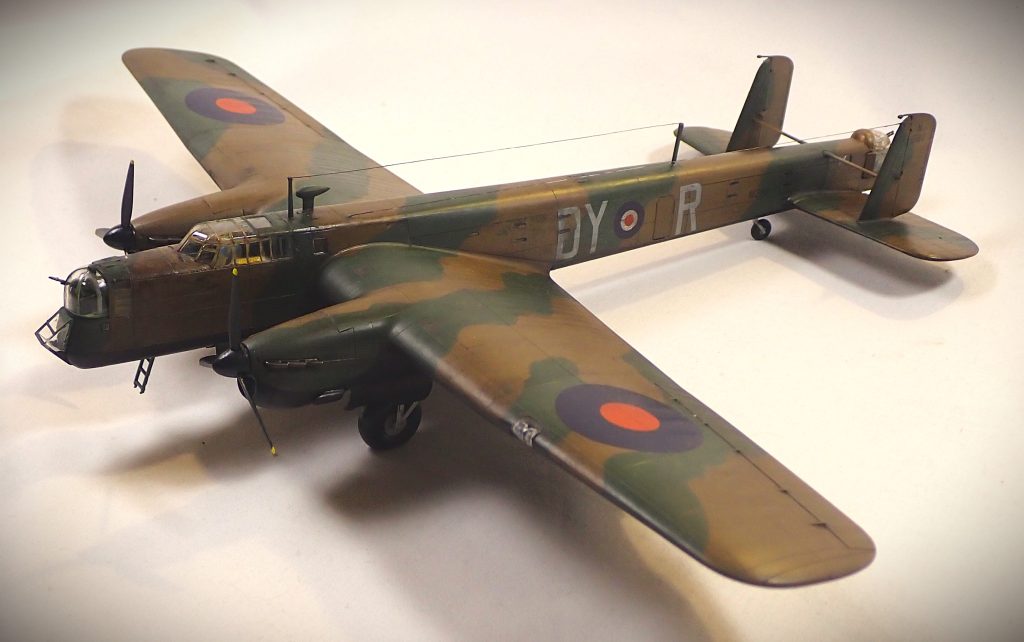
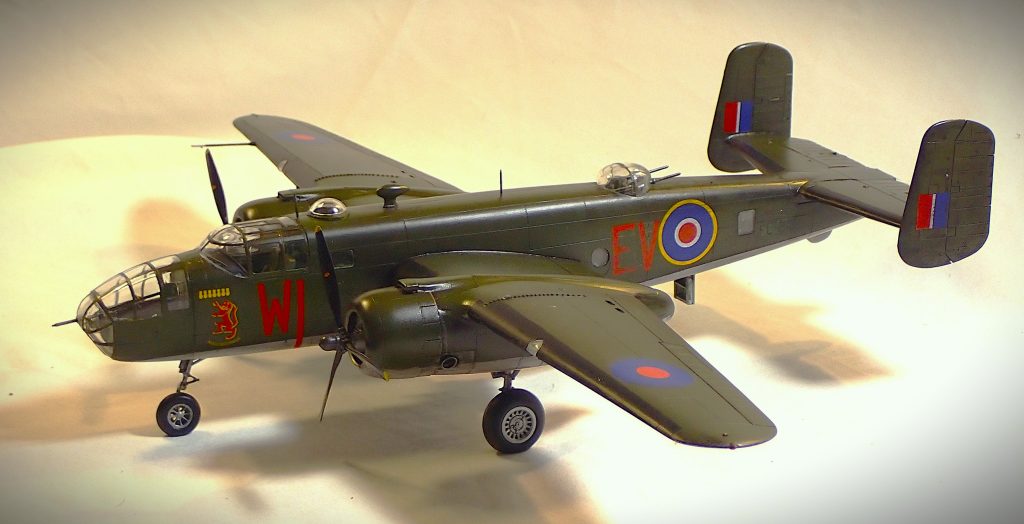
Lend Lease bombers retained the US factory colours of Olive Drab upper and Neutral Grey undersides from around early 1943. This also applied to transport aircraft.
Night fighters and Intruders were initially given an overall Special Night scheme with red code and serials. In 1944 a new scheme was authorised consisting of an overall Medium Sea Grey with disruptive Dark Green on the upper surfaces and a mid-way demarcation line which could be wavy or straight. The Intruder aircraft, fighters and fighter-bombers used for disrupting enemy activities behind the lines, were given the Day Fighter Scheme (Ocean Grey and Dark Green) from 1942 with Special Night undersides and a mid-way demarcation. This was slightly adjusted by replacing the OG with MSG in 1944 to come in line with night fighters. Naturally, anomalies occurred.
POST WW2
A review of the BS 381C system was reviewed in 1948 and a new system using three-digit codes for colours was established. This became the BS 381:Colours for Specific Purposes and the palette increased to 91 colours. Some colours were removed, for example Ocean Grey, other colours adjusted slightly as in the Sky S becoming more of a green-yellow with other colours being added.
After the war the RAF continued with the Dark Green and Ocean Grey upper with Medium Sea Grey undersides until around 1947. In 1946 Fighter Command and the Air Ministry discussed an all-metal scheme for use on RAF fighters. Some fighters had already been bare metal in the Italian and South East Asian theatres since 1945. In May 1947 the scheme was approved and all new aircraft, notably the new jets, were delivered in an Aluminium finish as natural metal was considered to be unsuitable for European weather. Aircraft already camouflaged were to remain that way until a suitable maintenance check could apply a respray. Consequently, many aircraft stayed camouflaged until the early 1950s. From 1947, all fighters deployed overseas were repainted a disruptive scheme of Dark Sea Grey and Dark Green over PRU Blue.

In 1949 the Aluminium finish was deemed unsuitable due to vast increases in speed and performance of the newer jets. A new resin primer combined with a finishing coat was introduced which could be polished to a high gloss finish. This became High-Speed Silver in April 1949 and approved in 1952 despite being used almost as soon as it was released. The night fighter scheme of overall Medium Sea Grey with top half Dark Green disruptive bands remained unchanged until the early 1950s.
During the Korean war RAF fighters were painted in the new High-Speed Silver scheme which proved ideal at high altitude but not ideal for camouflage against the ground when flying low altitude. With lessons learnt the re-introduction of camouflage surfaces began in September 1953. The disruptive pattern was applied with Dark Green and Dark Sea Grey upper surfaces with High-Speed Silver undersides retained. Dark Sea Grey replaced Ocean Grey. The same was applied to night fighters which gave up their wartime scheme and the new scheme used with Medium Sea Grey undersides. Radomes were painted predominantly Night or some with Radome Tan. This upper surface pattern stayed until well into the 1980s. From August 1965 the undersides were painted in a new non-metallic finish with a neutral grey colour which became Light Aircraft Grey. From 1965 to around 1995 the official standard for tactical aircraft was upper Dark Green/Dark Sea Grey over Light Aircraft Grey. However, there were anomalies. In the mid-eighties a new wrap around Dark green/Dark Sea Grey scheme was applied to frontline camouflaged aircraft, the Light Aircraft Grey being discontinued, namely Tornados, Jaguars, Harriers and Buccaneers (Phantoms were in Camouflage Grey for Air Defence). The use of Desert Pink in 1991 for the Gulf War was an interruption of this scheme. After 1995 all tactical aircraft were painted in the Air Defence Scheme.
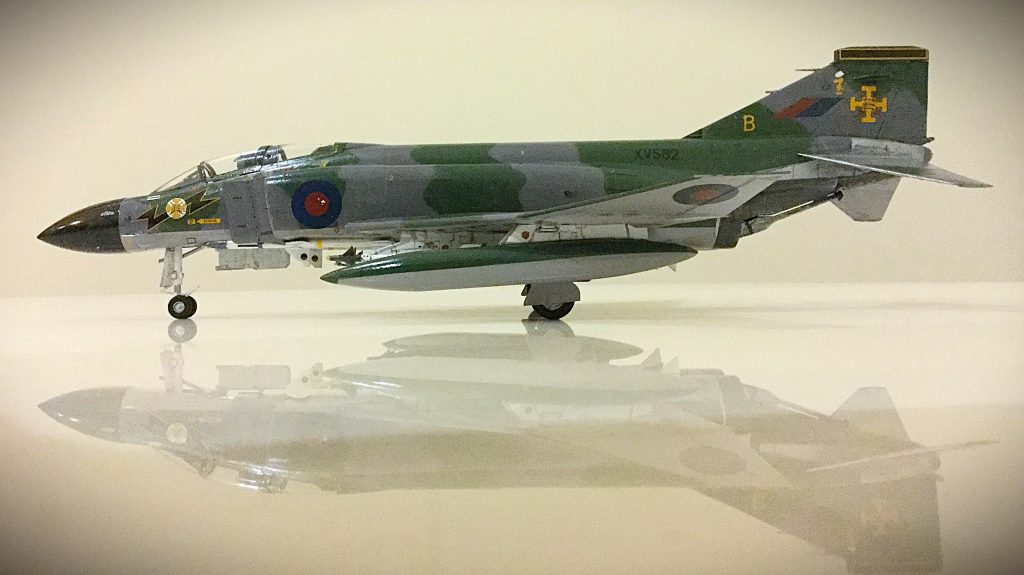
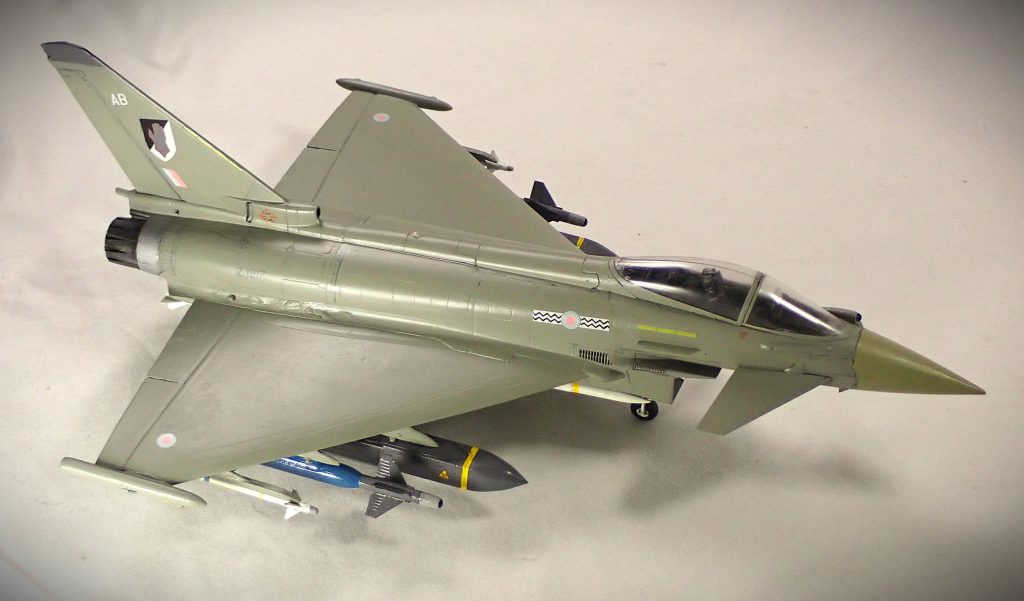
The original 1978 Air Defence Scheme was Camouflage Grey (or Barley Grey) over Light Aircraft Grey. Phantoms had a third shade added of Medium Sea Grey on the upper wings. In 1984 the Tornado F.3 became the main air defence interceptor with the RAF using the two-tone Air Defence Scheme. In 2007 this was reduced to a single overall Medium Sea Grey. The current Typhoon II was introduced in 2007 and has been painted in overall Camouflage Grey since its inception.
An exception to this rule is the English Electric Lightning. It was the only British RAF aircraft to enter service in its Natural Metal Finish state in order to reduce drag. The only area to be painted was the dorsal spine and tail fin, often painted in squadron colours, and non-reflective black upper nose and cockpit surround. However, two squadrons in Germany, No.19 and No.92, were given a unique scheme of Dark Green upper surfaces with NMF undersides. In the mid-seventies the disruptive pattern of Dark Green/Dark Sea Grey was applied to home-based Lightnings. From the late 1970s the Lightning squadrons adopted the Air Defence Scheme until their eventual retirement in 1988.
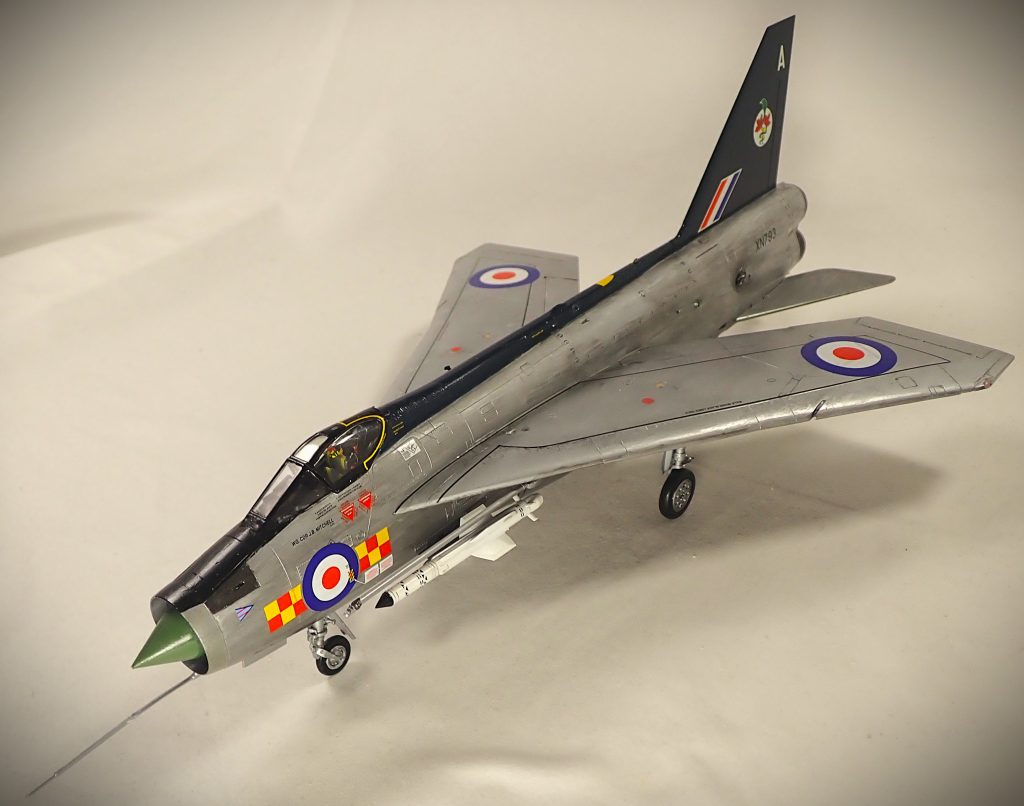
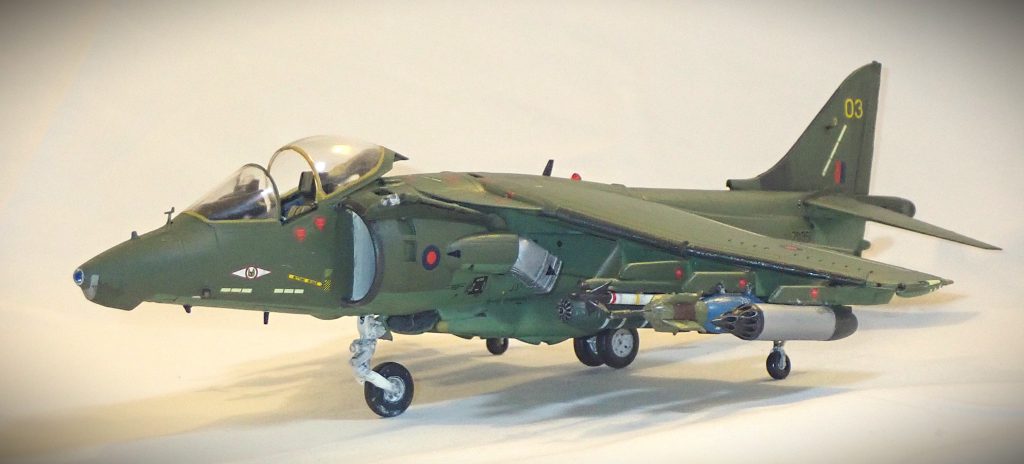
Another anomaly was a unique scheme applied to the Harrier II GR.5 in 1987 until 1995 on Harriers based in frontline units in Germany. The upper surfaces were Nato Green, a dark olive green, with undersides of Lichen Green, interestingly a colour which was never entered into the BS 381C chart, with demarcation lines along the length and height in horizontal and vertical directions. The two-tone scheme gave superb concealment in the forest environment of West Germany. Some GR.7 Harriers also used the scheme up until 1995 when all Harriers reverted to the Air Defence two-tone scheme.
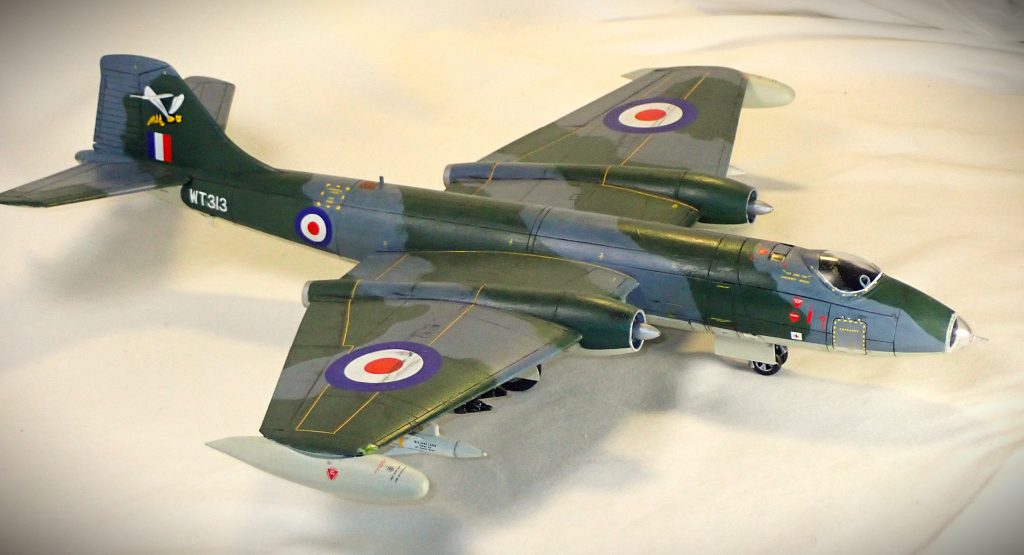
Bombers retained the RAF standard of disruptive Dark green/Dark Earth with Night undersides apart from those which were sent to Pacific air bases for the push on Japan known as Tiger Force. These were painted overall White with Night undersides and low demarcation lines. With the fall of Japan some stayed for occupation duties with the majority being recalled. All bombers adopted this scheme. From 1947 the topsides were resprayed in Medium Sea Grey with Night lower and the demarcation raised to high. Initial deliveries of the first jet bomber, the Canberra, were given this paint scheme. The scheme lasted until late 1951 when the vast majority of Bombers transferred to the overall High-Speed Silver.
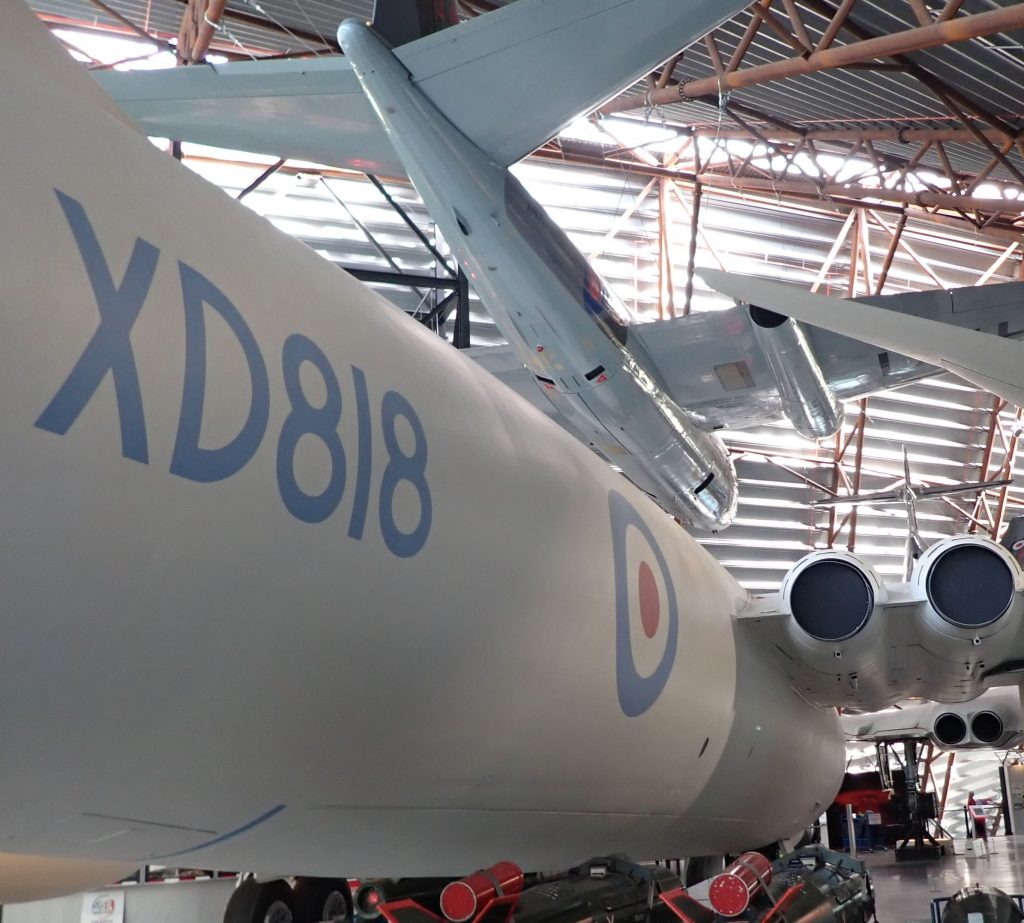
The introduction of the V-Bombers in the mid-1950s, beginning with the Valiant in 1955, gave way to a new scheme developed specifically for the role as opposed to practicality. The fleet of V-Bombers were essentially designed as a nuclear bomb delivery platform. In 1957 a new paint was created for the fleet called Anti-Flash White as a thermal reflective coat for protection against nuclear blast. Controversy remains as to whether it was just plain White. This was also applied for a brief period to FAA Buccaneers in their tactical nuclear strike capability.
In 1964 the scheme was revised as operations re-focused on low-level bombing. Camouflaged upper surfaces were again applied using a slightly different combination of Medium Sea Grey and Dark Green. Anti Flash White remained on undersides until 1966 before being replaced with Light Aircraft Grey, although the Canberra fleet retained the Dark Sea Grey on upper surfaces. Valiant and Victor bombers were removed from operational service by 1968 leaving Vulcans to fulfil the role. The last operations by Vulcans took place in 1982 for the Falklands War. Four Vulcans flew sorties from Ascension Island on sixteen-hour round trips to bomb Stanley airport being refuelled by Victor tankers mid-flight. These retained the top camo coat but were given a Dark Sea Grey underside. This scheme became obsolete with the retirement of the Vulcan in 1984. After the retirement of the Bomber fleet the task of strike aircraft shifted to the more capable Tornado, Jaguar, Harrier, Buccaneer and later Typhoon II with the aforementioned overall grey colour schemes.
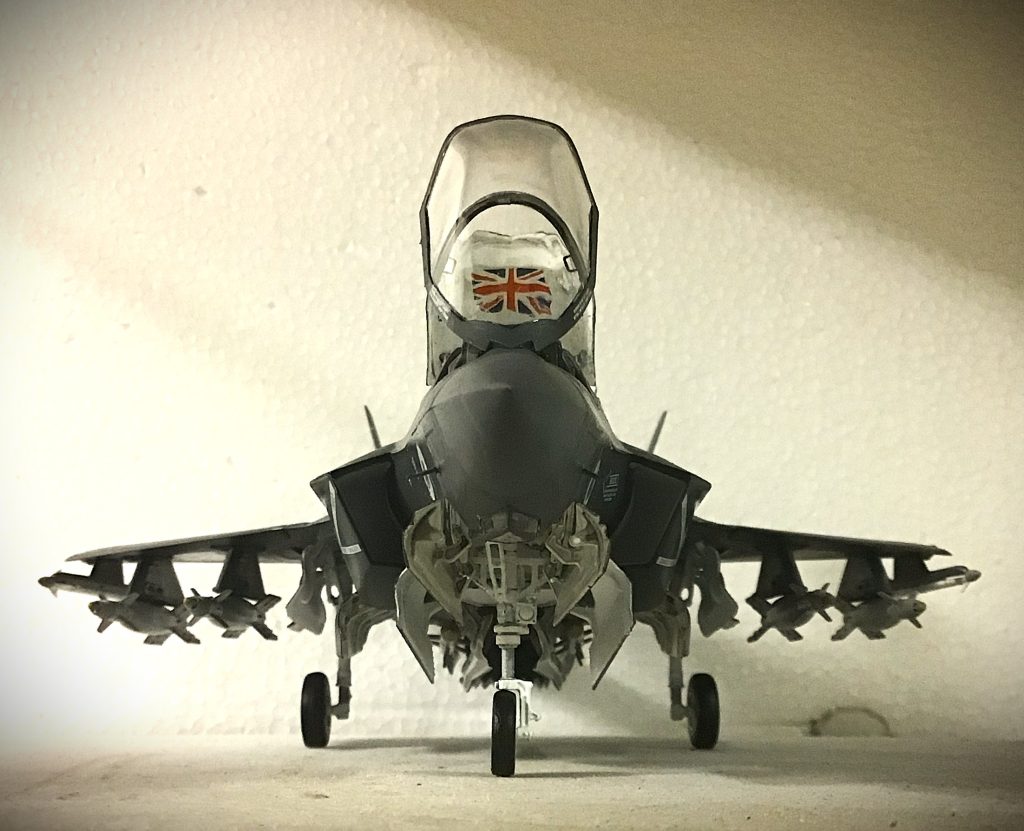
The most recent acquisition by the RAF of the F-35B has its own unique scheme. Officially it is overall Camouflage Grey however, the early production models had a lighter colour of Haze Grey for the extensive RAM panels and a top covering of overall metallic radar absorbent ‘Have Glass’ finish designed to blend with the sky and reduce its radar profile. Later models tend to be overall Camouflage Grey with the metallic finish giving a range of dark to light grey depending on the light.
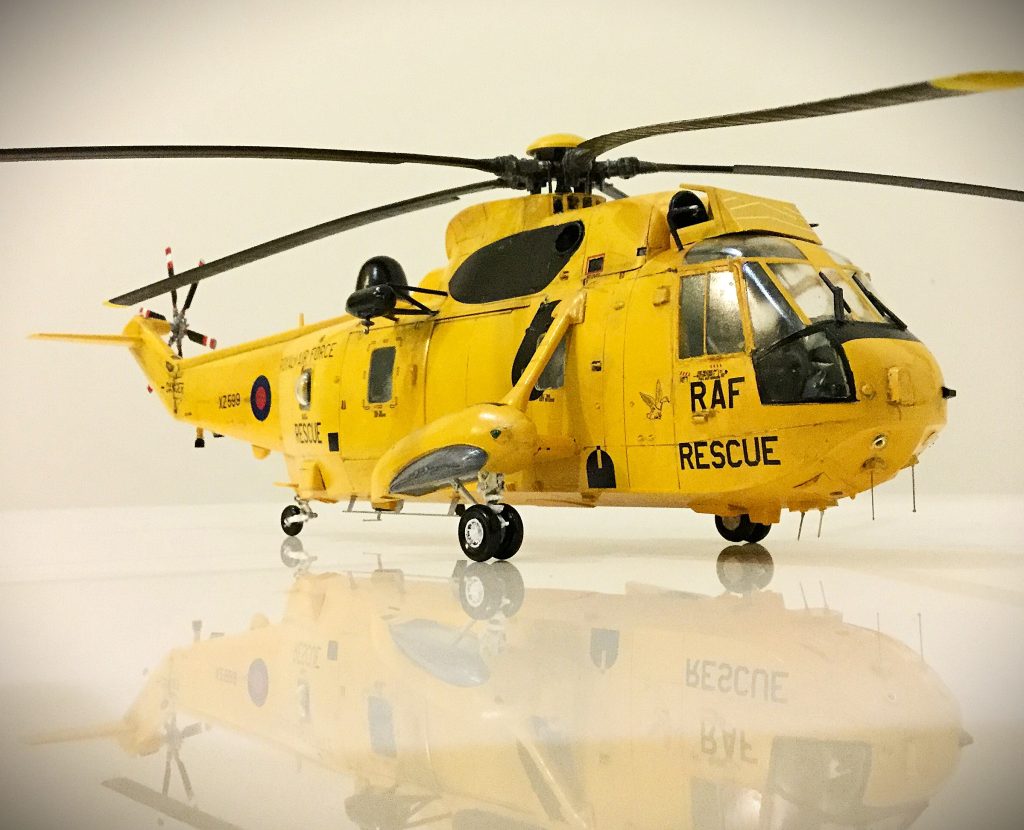
The RAF helicopter fleet used specifically for the role of Air Sea Rescue have had the overall Trainer Yellow scheme since the early sixties. Other RAF squadrons operating helicopters include Chinooks, Merlins and Pumas for transport and logistics with an overall Olive Drab scheme. The Army Air Corps, formed in 1957, used many types of helicopters for a multitude of uses, with a variety of schemes over the years, Army and Royal Marine Lynx were given a wrap around scheme of disruptive Medium Sea Grey and Marine Green (similar to NATO Green).
Logistic and transport aircraft were given variations of temperate land schemes until a unique scheme of Aluminium lower with White upper surfaces was introduced in the 1950s. A blue demarcation line appeared about two thirds up the side with a reverse lightning bolt ‘z’ near the cockpit area. In the 1960s the Aluminium changed to Light Aircraft Grey. With the arrival of the Hercules a new scheme was introduced of disruptive pattern Dark Earth and Light Stone upper and sides with Night undersides and a distinctive white cap over the cockpit area. Although intended for the Middle East the scheme was applied to all Transports. By the mid-1970s only the Hercules, Victor and VC10 remained as transport/refuelling aircraft. From 1996 an overall Camouflage Grey has been applied to all transports/refuelling aircraft. In 2007 the Hercules fleet adopted an overall NATO Green scheme until their untimely retirement in 2024. Leased C-17 Globemaster have retained the overall AMC Grey scheme, also applied to the new Atlas fleet.
Trainer aircraft have been graced with many schemes over the years. Silver machines with Trainer Yellow flashes on the wings was a popular trainer scheme during the 1930s. The Temperate Land Scheme with yellow undersides was common during WW2. Overall Trainer Yellow was common practice after the war. Jets developed different schemes using overall Medium Sea Grey with Signal Red patches on the wings and fuselage. A scheme of White, Signal Red and Grey was adapted in the 1970s which resembled a Civilian scheme. Recently, training aircraft are given an overall Gloss Night finish with Trainer Yellow flashes on the wings.