RAF Coastal Command employed the Temperate Sea Scheme used by the FAA from pre-war. The official colours were Dark Slate Grey and Extra Dark Sea Grey disruptive scheme with Sky Grey undersides. DSG was a dark grey/olive green colour which in certain light looked similar to Dark Green. EDSG is a dark grey with blue hints. Both colours were prone to fading, especially in the harsh coastal conditions. In mid-1940 the Sky S was introduced to the RAF which in turn was utilised by Coastal Command and the FAA. By December 1940 it was official as the underside for all FAA and Coastal Command planes. However, in early 1941 RAF Coastal Command began using white as the underside colour including the sides of its larger aircraft. The high demarcation line was usually wavy with the tail fin being painted white as well. A prime example is the Short Sunderland flying boat. The scheme was also referred to as Anti-Submarine Scheme as most Coastal Command patrol aircraft were equipped for ASW roles. Some Coastal Command aircraft were given Night undersides with low demarcation for special operations. Some Bristol Beaufort torpedo bombers used this scheme. Later in the war from late 1943 onwards, Coastal Command aircraft used a single colour EDSG for top surfaces and white sides and undersides. The demarcation line got higher so that only the very top surfaces were in camo colour giving the impression that the aircraft was all white. This scheme became official in September 1944 and lasted well after the end of WW2.
The Fleet Air Arm used the Temperate Sea Scheme throughout the war and into the post war period.
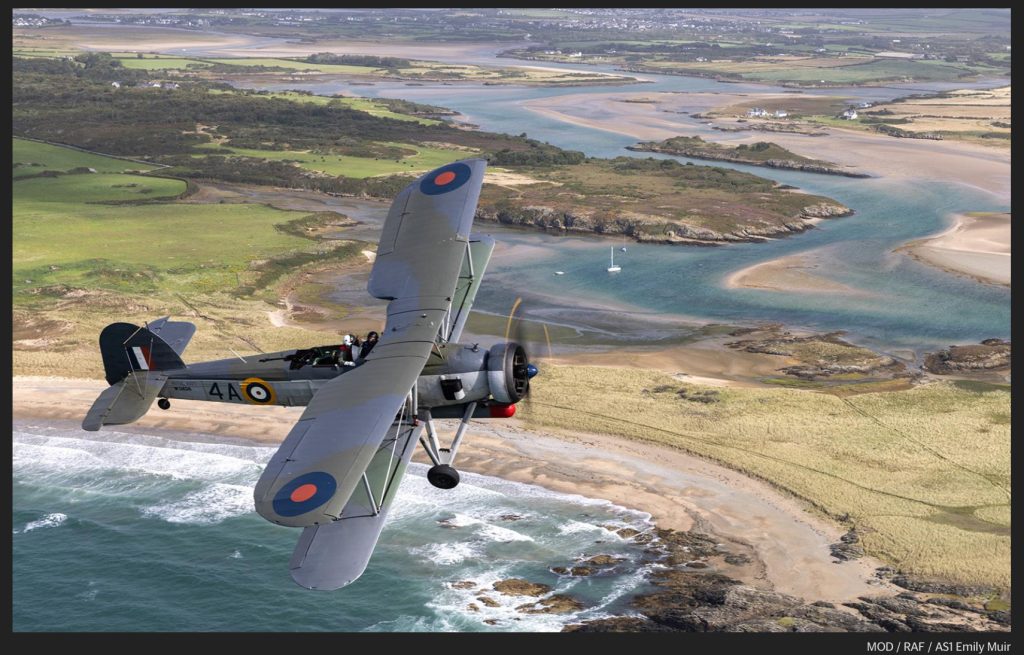
Early in the war the FAA carried a large number of biplane aircraft, for example the Swordfish, Albacore and Walrus. The need for the lower wing to be lighter to allow for shade became apparent. To this end all biplane lower wings were given a disruptive scheme of Light Slate Grey and Dark Sea Grey from before the war until the end, despite most of the biplanes being retired by the end of hostilities. The FAA also made use of White and Black Distemper, a temporary wash applied for certain missions, used for example on the Swordfish.
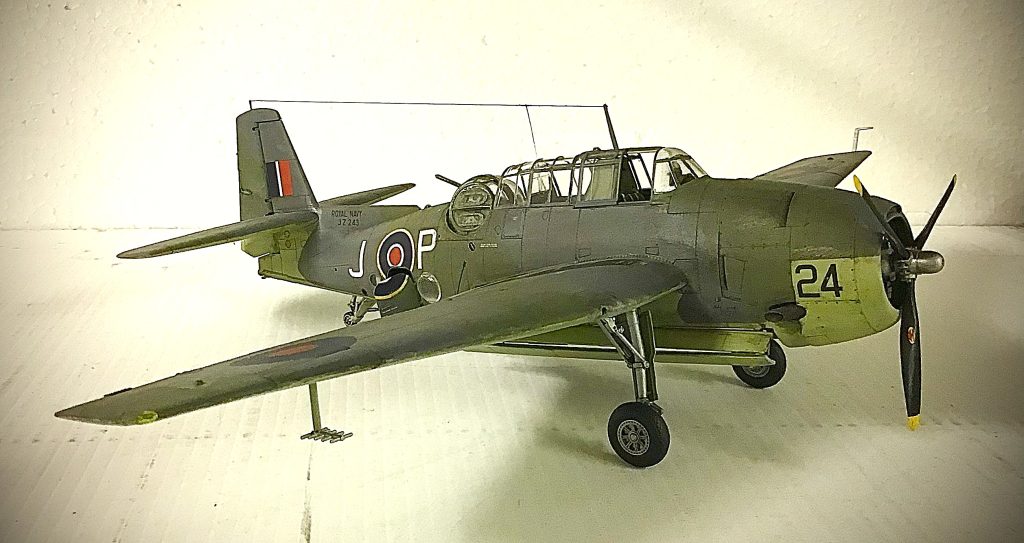
Early US Lend Lease aircraft from 1941 to 1944 were delivered to the FAA in the factory DuPont colours which were similar to the BS counterparts although the Sky was on the too green side. In 1942 the American services and MAP attempted to standardise the colours for all Lend Lease aircraft resulting in the Army-Navy Aeronautical or ANA system launched in 1943. The ANA Sky was almost exact but there was no ANA EDSG or DSG the two colours being ANA Sea Grey and ANA Olive Drab respectively. Grumman being the main supplier of Lend Lease aircraft to the UK continued to use the DuPont colours. Consequently, there was a vast variety of shades on all Lend Lease aircraft for the FAA. In early 1945 all lend lease FAA aircraft were left in the factory colour of Glossy Sea Blue, an overall dark blue, the first time a US scheme had been applied to FAA aircraft. The late Corsair, Wildcat Mk.IV and Hellcat Mk.II were sent out to the Pacific in this colour.
Post WW2
Maritime Patrol aircraft from 1947 were white lower and sides with Medium Sea Grey upper. The introduction of the Shackleton in 1951 replaced the vast majority of Maritime Reconnaissance aircraft . In 1955 a new scheme of Dark Sea Grey with only the fuselage upper surface White was introduced although all AEW aircraft were given the overall Dark Sea Grey scheme. A new scheme of Light Aircraft Grey and Hemp (Camouflage Beige) emerged in the early 1980s. Hemp is a grey-beige colour, almost like dark linen. This was applied to upper surfaces of service aircraft, i.e. tankers and maritime reconnaissance, notably the Nimrod, from the early 1980s to around 2010 when an overall camouflage Grey was applied.
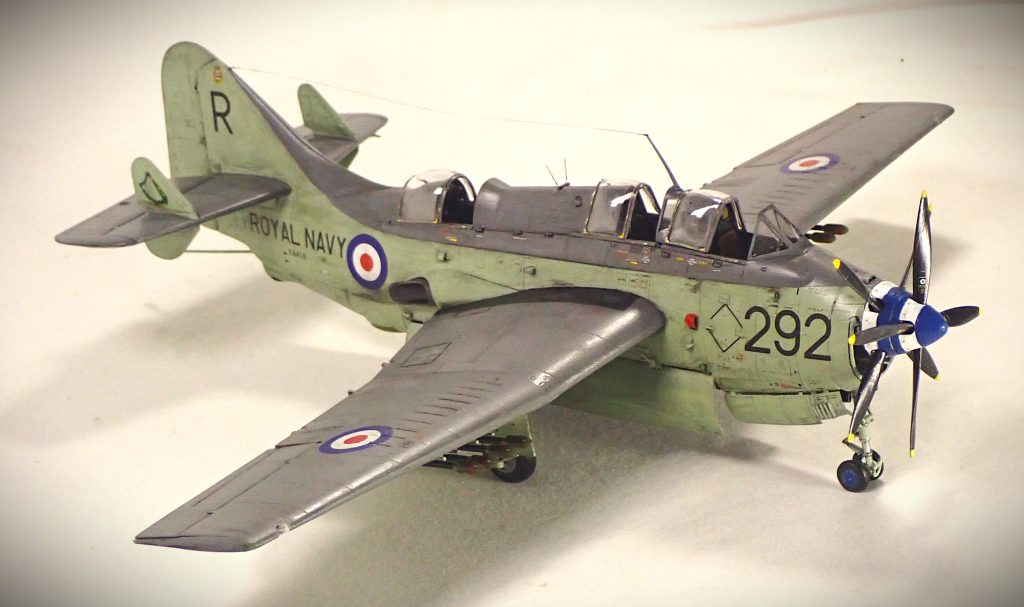
The FAA dropped the Dark Slate Grey soon after the war and all their aircraft had upper surfaces of EDSG and Sky undersides with a low demarcation line. However, this was considered too dark, so the demarcation line was raised high on the fuselage leaving the tail as Sky. The only exception was a very brief period for the Sea Hornet which was finished in Aluminium. However, most FAA aircraft were decorated with invasion stripes for Korea and Suez. During the Korean war all FAA fighters were given black and white stripes to the fuselage and wings in a similar fashion to D-Day stripes. During the Suez Crisis in 1956, the stripes were black and yellow.
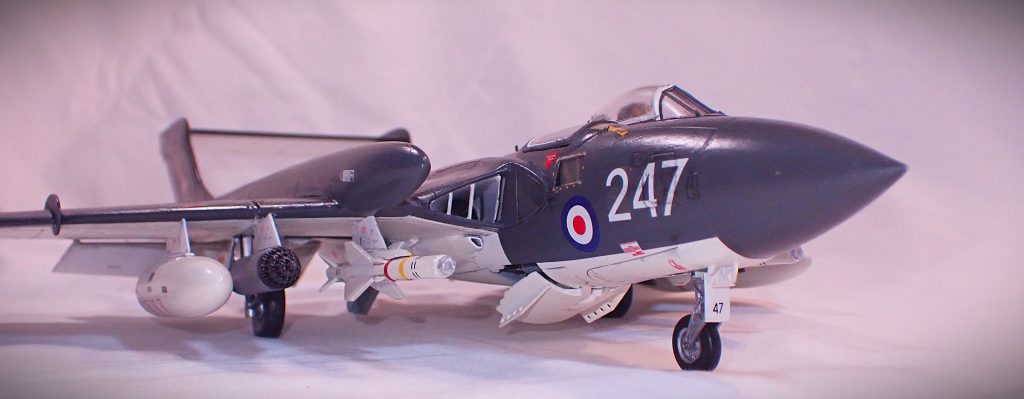
In 1957, when the RAF introduced Anti-Flash White, FAA aircraft were treated in a similar way with a new scheme of EDSG upper and White undersides with a demarcation line being halfway. Sea Vixens were given the same scheme but with a low demarcation line and the EDSG wrapped over the leading edges. The Phantom used the same scheme with the white undersides only. Many of the Buccaneers were given an overall White coat, as mentioned earlier, with later versions given an overall EDSG. These colour schemes lasted until the early 1980s when an overall Camouflage Grey was introduced. During the Falklands the FAA Sea Harriers were given an overall EDSG on the way south apart from 809 NAS which remained in their overall Camouflage Grey.
In 1983 all Sea Harriers, the only remaining fixed wing aircraft to be operational with the FAA, got a new coat of Dark Sea Grey with low vis roundels. From around 1996 Sea Harriers were given a coat of overall Medium Sea Grey with Dark Sea Grey radomes until 2006 when they were retired. The remaining Harrier GR7 and 9 remained in the RAF air defence grey schemes.
Helicopter colours followed their own series of schemes beginning in the early to mid-fifties. These used the sky sides and undersides with Dark Sea Grey upper scheme of the early FAA. In 1957 a new colour unique to rotor craft was introduced as RAF Blue Grey, a dark colour similar to EDSG but much bluer. ASW aircraft were given upper surfaces of Trainer Yellow. Search and Rescue Helicopters were painted the same but with Red Orange or Signal Red nose and partial tail. Later an overall Oxford Blue was adopted for the Lynx and Wasp helicopters. Since 1982 the FAA helicopters have transitioned to the standard overall Medium Sea Grey with SAR craft retaining the red areas. The most recent Wildcat helicopters have adopted a two-tone wrap around disruptive pattern of Medium Sea Grey with Dark Sea Grey.
From 1957 the Commando helicopters were painted an overall Light Stone which quickly evolved into disruptive Olive Drab and Light Stone. From the early seventies the scheme changed to overall Olive Drab which is still in use today. Helicopters taking part in Arctic exercises are given White Distemper ‘tiger stripe’ scheme.
This gives a general outline to colour schemes. For further information there are many websites dealing with the subject.